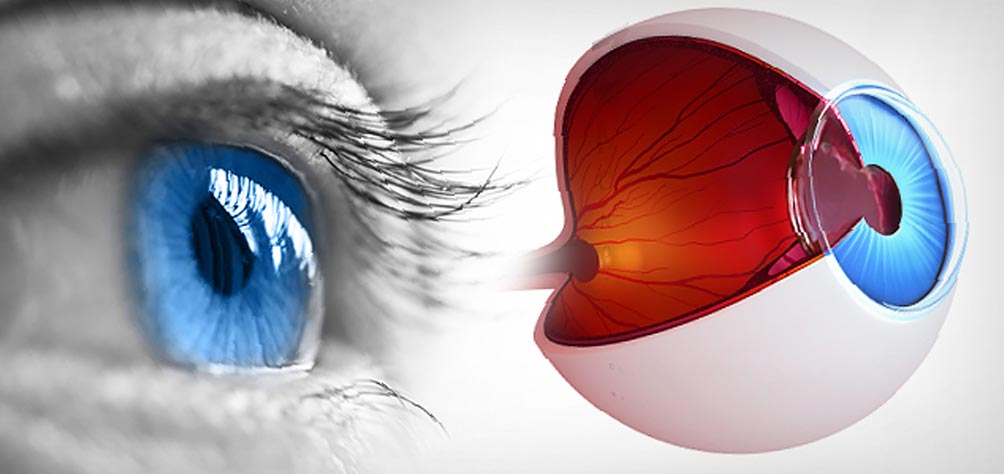
Conditions We Treat
- Diabetic Retinopathy
Diabetic retinopathy is an eye condition that can cause vision loss and blindness in people who have diabetes. It affects blood vessels in the retina (the light-sensitive layer of tissue in the back of your eye). If you have diabetes, it’s important to get a comprehensive dilated eye exam at least once a year. Diabetic retinopathy may not have any symptoms at first — but finding it early can help you take steps to protect your vision.
- Age Related Macular Degeneration
Age-related macular degeneration (AMD) is an eye disease that can blur your central vision. It can make harder to see faces, read, drive, or do close-up work like cooking or fixing things around the house It happens when aging causes damage to the macula — the part of the eye that controls sharp, straight-ahead vision.
AMD is a common condition — it’s a leading cause of vision loss for older adults.
AMD happens very slowly in some people and faster in others. If you have early AMD, you may not notice vision loss for a long time. That’s why it’s important to get regular eye exams to find out if you have AMD.
- Retinopathy of Prematurity
Retinopathy of prematurity (ROP) is an eye disease that can happen in babies who are premature (born before 37 weeks) — or who weigh less than 2.5 kg at birth. It needs screening at 4 weeks of life, and immediate management if needed.
- Retinal Vein Occlusions
Central retinal vein occlusion (CRVO) is an eye condition, when a blood clot blocks the main vein where blood flows out of the retina. Some people don’t have any symptoms, but many people with CRVO have blurry vision.
- Retinal Detachment
Retinal detachment is an eye problem that happens when your retina is pulled away from its normal position at the back of your eye. If your retina is detached, you may not be able to see as clearly as normal, and you may notice other sudden symptoms, including:
- A lot of new floaters (small dark spots or squiggly lines that float across your vision
- Flashes of light in one eye or both eyes
- A dark shadow or “curtain” on the sides or in the middle of your field of vision
Retinal detachment is a medical emergency. If you have symptoms of a detached retina, it’s important to go to your eye doctor or the emergency room right away.
The symptoms of retinal detachment often come on quickly. If the retinal detachment isn’t treated right away, more of the retina can detach — which increases the risk of permanent vision loss or blindness.
- Vitreous haemorrhage
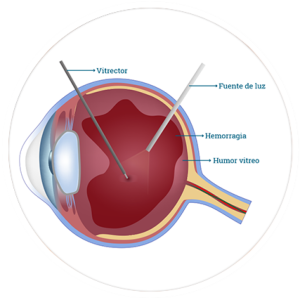
Vitreous haemorrhage is bleeding into the jelly-like filling of the back part of your eye.
Vitreous haemorrhage varies in degree from mild, with ‘floaters’ and haziness in the vision, to complete loss of vision.
- Cystoid macular edema
Cystoid macular edema or CME, is a painless disorder which affects the central retina or macula. When this condition is present, multiple cyst-like (cystoid) areas of fluid appear in the macula and cause retinal swelling or edema.
- Macular hole
A macular hole is a rare eye condition that can blur the central vision you use to do everyday tasks like driving or reading. Macular holes happen when an opening forms in the macula — usually after being stretched or pulled. Most macular holes form because of changes in the eye that happen as you age.
- Retinitis pigmentosa
Retinitis pigmentosa (RP) is a group of rare eye diseases. RP makes cells in the retina break down slowly over time, causing vision loss. RP is a genetic disease that people are born with. Symptoms usually start in childhood, and most people eventually lose most of their sight. There’s no cure for RP. But vision aids and rehabilitation (training) programs can help people with RP make the most of their vision.
- Ocular trauma
Eye injuries are common Eye trauma should always be fully assessed, as penetrating eye injuries are otherwise easily missed but can rapidly lead to sight-threatening infections.
- Central serous retinopathy
Central serous choroidopathy is a disease that causes fluid to build up under the retina. Symptoms may include:
- Dim and blurred blind spot in the center of vision
• Distortion of straight lines with the affected eye
• Objects appearing smaller or farther away with the affected eye
- Hereditary Macular dystrophies
Hereditary macular dystrophies are a large group of inherited eye disorders resulting in irreversible visual loss. They develop due to mutations in one or more genes that lead to the death of the retinal photoreceptor cells.
- Routinely performed procedures
- Fundus fluorescein angiography (FFA)
- Optical coherence tomography (OCT)
- Ultrasound B-scan
- Transpupillary Thermotherapy
- Laser photocoagulation
- Intravitreal injections
