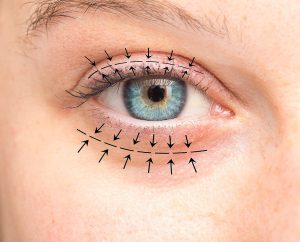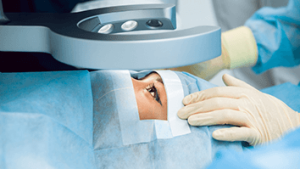
Ophthalmic plastic surgery, or Oculoplasty, is a specialized branch of ophthalmology dealing with cosmetic and functional deformities and eye tumors.

Conditions We Treat


  • Eyelid malpositions – Entropion and ectropion

We perform surgical correction under local anesthesia through hidden incisions ensuring no visible scarring. Stitches are usually removed at 5-7 days. We also offer additional procedures like skin or mucous membrane grafting for severe cases.

  • Ptosis

We diagnose and treat Ptosis or droopy eyelids which may present by birth in children or in adults due to the weakness of the muscles. If left uncorrected, ptosis in small children can cause lazy eye and decrease in vision. We treat most cases of ptosis by a simple surgery.

  • Watering eyes

Watering from the eyes is typically caused by a tear duct obstruction, often due to trauma or infections. Congenital cases may present in infancy. Dacryocystorhinostomy (DCR) surgery can effectively relieve the obstruction, either through a small skin incision near the inner corner of the eye or from inside the nose (Endonasal). For children with congenital tear duct obstruction, a minimally invasive outpatient procedure called probing is often sufficient, guided by endoscopy. Some cases may require DCR at a later age.


  • Thyroid eye disease

Thyroid eye disease causes prominent eye bulging, differing eye aperture sizes, swelling, redness, watering, double vision, and decreased vision. We are adept at treating this with medications and surgery. Steroids and medications treat initial phases, while persistent issues may require surgery. Decompression surgery places the eyeball back into the socket, improving appearance and reducing optic nerve compression. Eyelid and squint surgeries correct eyelid malposition and squinting.

  • Eyelid trauma and Orbital fracture following injury

We treat Eye trauma with associated  damage to the eyeball, eyelids, tear duct, and surrounding bones by a thorough examination and address any vision-related or functional issues. Prompt treatment of tear duct injuries is done using silicone stents. Eyelid injuries require careful repair to maintain function and appearance.

Routinely performed procedures

  • Lacrimal Surgeries
      •  Syringing and probing
      • DCT /DCR Surgery
      • Incision and drainage of lacrimal abscess
      • Fistulectomy
      • Botox injection to lacrimal gland
  • Socket Surgeries
      • Evisceration
      • Evisceration + implant
      • Enucleation + implant
      • Fornix formation suture
      • Secondary implant
      • Implant exchange

  • Face and Lid surgeries
      •  Lid tear repair
      • Lid tear repair with canalicular repair with minimonaka
      • Entropion correction
      • Electroepilation
      • Ectropion correction
      • Skin graft
      • Sling surgery for ptosis
      • Levator Resection /advancement for ptosis
      • Blepharoptosis correction
      • Blepharoplasty
      • Lid reconstruction
      • Levator recession
      • Botox injection for dystonia